


Glow Tales: Merge & Makeover
Paxie Games
Glow Tales: Merge & Makeover is the kind of casual game I open when I want something gentle rather than demanding. Its central idea is easy to understand: combine items, make progress, and shape a beauty-focused story through each decision. That sounds simple, and it is, but the appeal comes from how the game turns small actions into a relaxed routine. I never feel pushed into learning a complicated control scheme before I can enjoy it.
After spending time with it, I see the game as a quiet blend of merge gameplay and makeover-themed progression. It is not trying to compete with an action game or a deep strategy title. Instead, it gives me a sequence of manageable tasks, visual changes, and small rewards that work well in short sessions. The strongest part is its mood: the presentation makes ordinary combining feel connected to a personal style journey.
That focus also defines its limits. If you want fast competition, demanding puzzles, or a large amount of strategic freedom from the first minute, this will probably feel too soft. If you enjoy watching a space, character, or visual situation gradually become more attractive while solving light combination tasks, it has a much better chance of fitting your habits.
How the first few sessions feel
The opening experience is approachable because the basic interaction is immediately readable. I can look at the available objects, identify matching possibilities, and decide which combination is worth making next. There is no need to memorize a long list of commands. That accessibility suits the Everyone content rating and makes the game easy to recommend to someone who prefers casual entertainment without a steep learning curve.
What I appreciate is the way the makeover theme gives each move a reason to exist. In a more abstract merge game, combining two identical pieces can feel like moving tokens around a board. Here, the surrounding beauty-story framing makes the action feel more purposeful. Even when the individual move is small, I am working toward a visible sense of improvement rather than simply clearing space.
Related News

Threads in Real Life: Who Should Join, Lurk, or Leave

How SHEIN Turned Shopping Into an Endless Content Feed

How to Make Fortnite Feel Smarter on Mobile

Should You Switch to Microsoft Outlook on Mobile?

Why Gallery Keeps Pulling Users Back

X Review: Why Its Network Still Matters
The free entry point is useful for trying the rhythm before deciding whether the game belongs on your phone. The game includes in-app purchases ranging from $0.99 to $99.99 per item, so I would approach spending carefully. My advice is to play long enough to understand whether the natural pace suits you before buying anything. A purchase can be convenient, but it should not be the reason the basic loop feels enjoyable.
One practical strength is its suitability for interrupted play. I can imagine using it during a short break, while waiting for an appointment, or at the end of the day when I want something more interactive than scrolling but less intense than a competitive game. The small-decision format makes it easy to stop after a few moves and return later without needing to rebuild concentration.
The beauty theme gives the board a purpose
The game’s setting is not just decoration placed behind a generic puzzle. Beauty, styling, and improvement provide the emotional direction for the progress. That matters because merge games can otherwise become visually interchangeable. Here, I read the board as part of a makeover process, so the act of combining feels tied to the idea of refinement.
Gallery
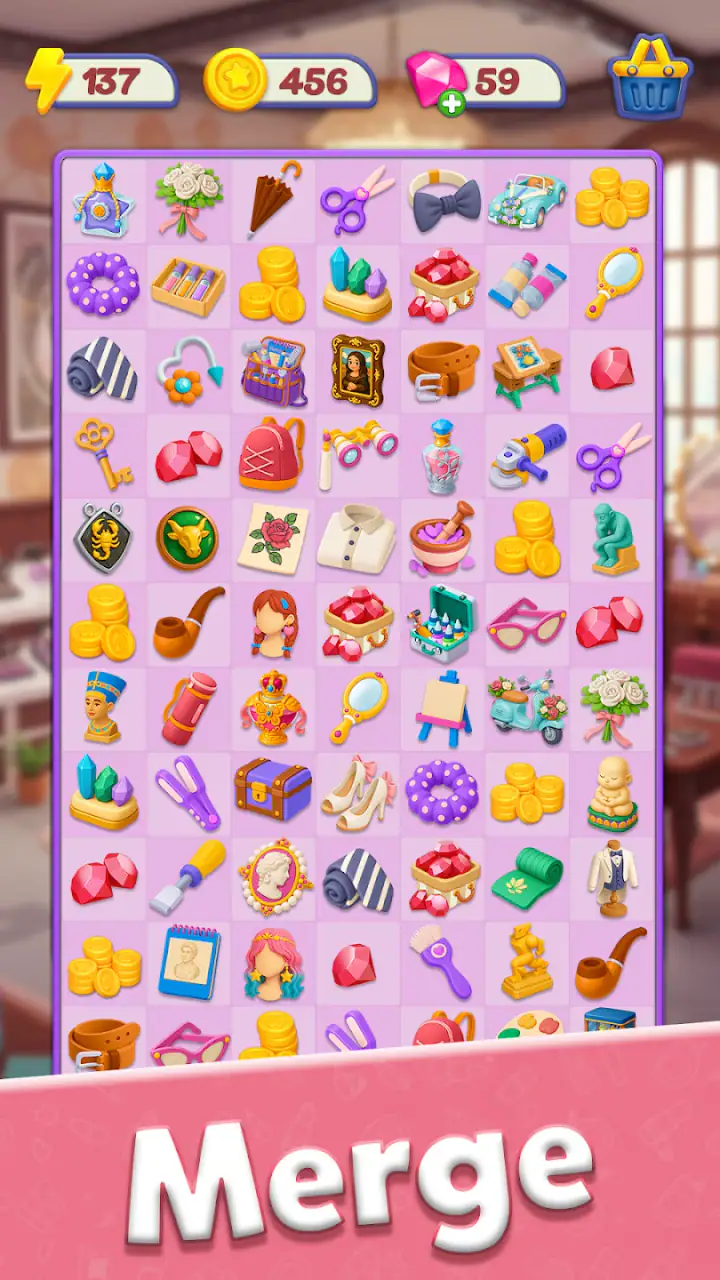
I also like that the theme does not require specialist knowledge. I do not need to understand fashion terminology or follow a complicated design system to participate. The game communicates through recognizable visual cues: items come together, the situation develops, and the overall presentation aims for a more polished result. That makes the experience friendly to casual players who may not normally choose a puzzle game.
There is a trade-off, though. The softer beauty direction may not appeal to players who prefer fantasy combat, mystery, or a more dramatic narrative. The setting is designed to feel pleasant and stylish rather than dangerous or unpredictable. I found that consistency helpful, but anyone looking for high stakes should choose a different kind of casual game.
Art direction and the language of improvement
The art direction works best when it keeps the screen readable. Merge boards can become confusing when too many objects compete for attention, so a clean visual hierarchy is important. In Glow Tales, the makeover context encourages me to notice not only what can be combined but also how the surrounding scene is changing. That creates a useful two-layer experience: I am solving the immediate board while following the larger visual transformation.
One non-obvious tip is to pause before making the easiest available combination. In a game built around improvement, the most obvious merge is not always the most helpful one. I found it more satisfying to scan the whole arrangement first, consider which spaces may become valuable, and then commit to the move. This small habit reduces the feeling of playing on autopilot and gives the casual mechanics a little more thought.
The visual style also supports the game’s intended pace. It does not need to overwhelm me with movement or constant effects to communicate progress. The calmer presentation leaves room for the board itself to remain the focus. That is especially useful when I am playing without full attention, although it can make the experience feel understated if I am hoping for dramatic visual feedback after every action.
Sound, timing, and the mood between moves
The overall audio-visual direction is important because this is a game about repetition. I may perform similar actions many times, so the experience depends on those actions feeling comfortable rather than exhausting. The sound and presentation work toward a relaxed rhythm, helping the game feel more like a short wind-down activity than a test of reflexes.
I would not describe the pacing as urgent. The pleasure comes from looking, choosing, merging, and seeing the next small change. That sequence creates a gentle loop in which the player has time to think. For me, the best sessions happen when I treat it as a calm ritual: make a few deliberate moves, enjoy the visual result, and stop before the board starts to feel like a chore.
This rhythm is also why the game suits people who dislike pressure. There is no need for me to react instantly to an enemy or maintain a perfect streak of fast decisions. The attention is directed toward arrangement and gradual progress. On the other hand, players who need constant excitement may interpret the same quality as slowness.
A realistic everyday use case is an evening when I have ten minutes before bed. I can play a few rounds, make progress on a makeover objective, and put the phone down without feeling that I abandoned a competitive match. The gentle structure makes it easier to control the session. I still need self-discipline around screen time, but the game itself does not create the same urgency as a title built around live competition.
Why the pacing matters for the merge loop
Merge mechanics can become repetitive when every move has the same emotional weight. Glow Tales avoids some of that flatness by connecting combinations to a broader beauty narrative. The pacing gives me time to notice that connection. Instead of treating every merge as a separate puzzle, I experience the board as a sequence of small steps toward a more complete visual outcome.
My main caution is that the game’s calm rhythm can expose repetition over longer sessions. I would not recommend forcing myself to play continuously for hours. It feels better in bursts, where the simple loop remains refreshing. If I want a game that constantly introduces new rules or challenges, a more complex puzzle alternative will probably offer stronger long-term variety.
The purchase structure is another reason to keep sessions measured. Since individual in-app items can cost from $0.99 up to $99.99, I would avoid spending simply to remove a moment of waiting or to chase progress more quickly. The better approach is to decide on a personal limit before playing. That keeps the relaxing mood from being interrupted by impulsive purchases.
Where the mechanics work and where they ask for patience
At its core, this is a casual merge game, and its success depends on whether the combination loop feels rewarding enough to support the makeover setting. In my experience, the pairing is logical. The merge action provides structure, while the beauty story gives the structure a reason. I always know what kind of experience the game wants to offer: gradual, visual, and easy to pick up.
The controls are friendly for touch screens because the interaction is based on direct movement and recognition rather than precision timing. That makes it suitable for players who want a low-pressure mobile game. It also means the game is less likely to satisfy someone searching for advanced control depth. Its challenge comes from deciding what to combine and when, not from mastering difficult input.
A useful workflow is to separate three decisions: what can merge now, what should remain available for a later combination, and which move improves the board’s flexibility. That third question is easy to overlook. A move can be valid without being helpful. Leaving room for future pieces and avoiding needless clutter makes the board easier to read, especially when I am playing quickly.
Another practical insight is to treat visual progress as feedback rather than decoration. When the scene or style direction changes, I use that result to judge whether my current approach is working for me. This helps prevent the game from becoming a mindless tapping routine. I am not just chasing the next combination; I am paying attention to how the sequence shapes the overall story.
The game is a better choice than a traditional makeover simulator for someone who wants a clear puzzle layer. A makeover-focused alternative may offer more direct styling decisions, while a pure merge title may provide a stronger emphasis on board optimization. Glow Tales sits between those approaches. It is best for players who want the relaxing satisfaction of merging but still care about the visual theme surrounding it.
Who will enjoy it most
I would recommend it to casual players who like gradual transformation, attractive presentation, and sessions that can be completed in small pieces. It should also suit someone who wants a game that feels approachable for a family audience. The Everyone rating reinforces that broad accessibility, while the simple structure means a new player can understand the appeal without studying a tutorial for a long time.
It is particularly suitable for:
- Players who enjoy beauty, styling, and makeover themes but want more interaction than a passive story.
- People who prefer relaxed puzzle games over reflex-heavy action.
- Anyone looking for a short-session title that can fit around daily routines.
- Merge fans who want a stronger visual identity than a purely abstract board provides.
I would suggest skipping it if your priority is competitive multiplayer, deep character customization, demanding strategic planning, or a fast-changing challenge structure. It is also not the right choice if you dislike in-app purchases on principle, because the purchase range means the store economy deserves attention even though the game itself is free to start.
Device and version considerations
The game supports Android versions from 7.1 onward, which makes it accessible to people using older compatible devices. The current version is 1.3.3, so I would keep the app updated through the normal store process to receive the intended current experience. I would also make sure the phone has enough free space for comfortable use, although I would not install it solely because of the broad operating-system support.
Developer Paxie Games has positioned this release as a casual game rather than a specialist beauty tool or a serious puzzle platform. That distinction is useful when deciding what to expect. I see it as entertainment with a coherent theme, not as an app for learning makeup, planning outfits, or producing real-world designs.
The game has reached over 500 thousand installs and holds a 4.1 average from around 16 thousand ratings. Those figures suggest that it has found a meaningful audience, but they should not replace personal testing. The important question is whether the combination of gentle pacing and makeover presentation matches your taste. Popularity can indicate visibility; it cannot guarantee that the loop will remain interesting for you.
My atmosphere verdict after living with the loop
What stays with me is the coherence between the game’s art direction, setting, sound, and mechanics. The merge system is simple, but it belongs to the same emotional world as the makeover progression. The visual language says refinement, the pacing says take your time, and the interactions support that message instead of fighting it. That unity is more valuable here than mechanical complexity would be.
I also appreciate that the game understands its place in the casual category. It does not need to pretend to be a major strategy experience. Its strength is giving me a pleasant, readable activity with a beauty-story frame. When I play in short sessions and make deliberate choices, the simplicity feels intentional. When I expect constant novelty, it feels limited.
My strongest recommendation is to approach it as a mood game with puzzle elements, not as a puzzle marathon. Look over the board before merging, preserve useful space, and let the visual progression provide part of the reward. Set a spending boundary before exploring the optional purchases, especially because the available items extend from $0.99 to $99.99 each. That approach keeps the experience focused on its best qualities.
Glow Tales: Merge & Makeover is free, approachable, and easy to understand, with a clear identity built around beauty and gradual change. I would recommend it to a friend who wants a calm mobile game for breaks or evenings, particularly if they enjoy seeing a scene become more polished through small actions. I would point a competitive player or a fan of complex systems elsewhere. For the right audience, the real appeal is the playable mood: every merge feels like a small step in a carefully styled story.
FAQs for Glow Tales: Merge & Makeover
What is Glow Tales: Merge & Makeover about?
Glow Tales: Merge & Makeover is a casual mobile game that combines merge puzzles with makeover and story elements. You collect and combine matching items to create upgraded objects, then use your progress to refresh characters, rooms, and other parts of the game world. It is designed for relaxed, accessible play, with gradual progression, visual customization, and narrative tasks providing goals beyond simply completing merge boards.
How does the merging gameplay work in Glow Tales: Merge & Makeover?
The main gameplay involves placing similar objects together so they merge into a more advanced item. These upgraded items can be used to complete requests, unlock rewards, and advance makeover projects. The board has limited space, so planning is important, especially when several objectives are active at once. Energy or other timed resources may also limit how long you can play continuously.
Can Glow Tales: Merge & Makeover be played for free?
Yes, Glow Tales: Merge & Makeover can generally be downloaded and played without an upfront purchase. However, like many free-to-play puzzle games, it may include optional in-app purchases for premium currency, extra energy, special bundles, or faster progress. You can usually advance without paying, but completing tasks more quickly may require patience, watching optional advertisements, or carefully managing the resources provided during regular play.
Does Glow Tales: Merge & Makeover require an internet connection?
An internet connection may be needed for certain features, including advertisements, cloud-related services, event content, updates, and in-app purchases. Some basic gameplay may work temporarily while offline, but availability can vary depending on the version and device. For the most reliable experience, it is best to launch the game with a stable connection and ensure that your progress is properly synchronized before changing devices.
Is Glow Tales: Merge & Makeover suitable for children?
Glow Tales: Merge & Makeover uses simple merge mechanics and colorful makeover themes that can appeal to younger players, but parents should review the store age rating and the game’s privacy and purchase settings before installation. Because the title may contain advertisements, optional purchases, and timed progression systems, enabling parental controls is recommended. The suitability also depends on the child’s ability to understand spending limits and in-game prompts.
Pros
- Relaxing merge gameplay with satisfying item combinations.
- Creative makeover choices let you personalize characters and spaces.
- Bright visuals and charming animations make the game appealing.
- Story-driven tasks provide goals beyond collecting merge items.
- Easy controls make it accessible for casual players.
Cons
- Energy limits can interrupt play during longer sessions.
- Some upgrades may require patience or repeated merging.
- Progress can feel slower without optional in-app purchases.
- The makeover options may become repetitive over time.
- Requires an internet connection for some features and updates.


